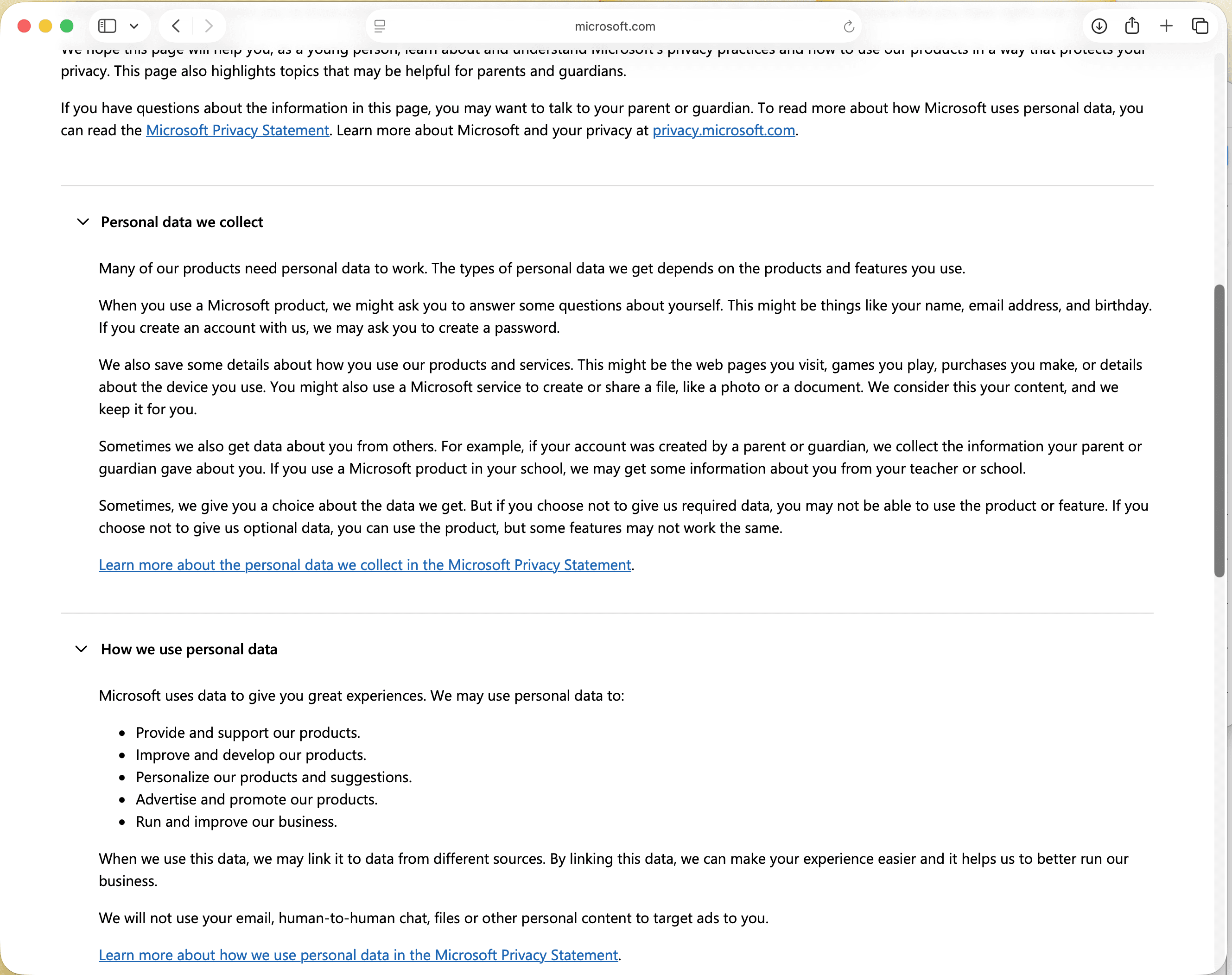
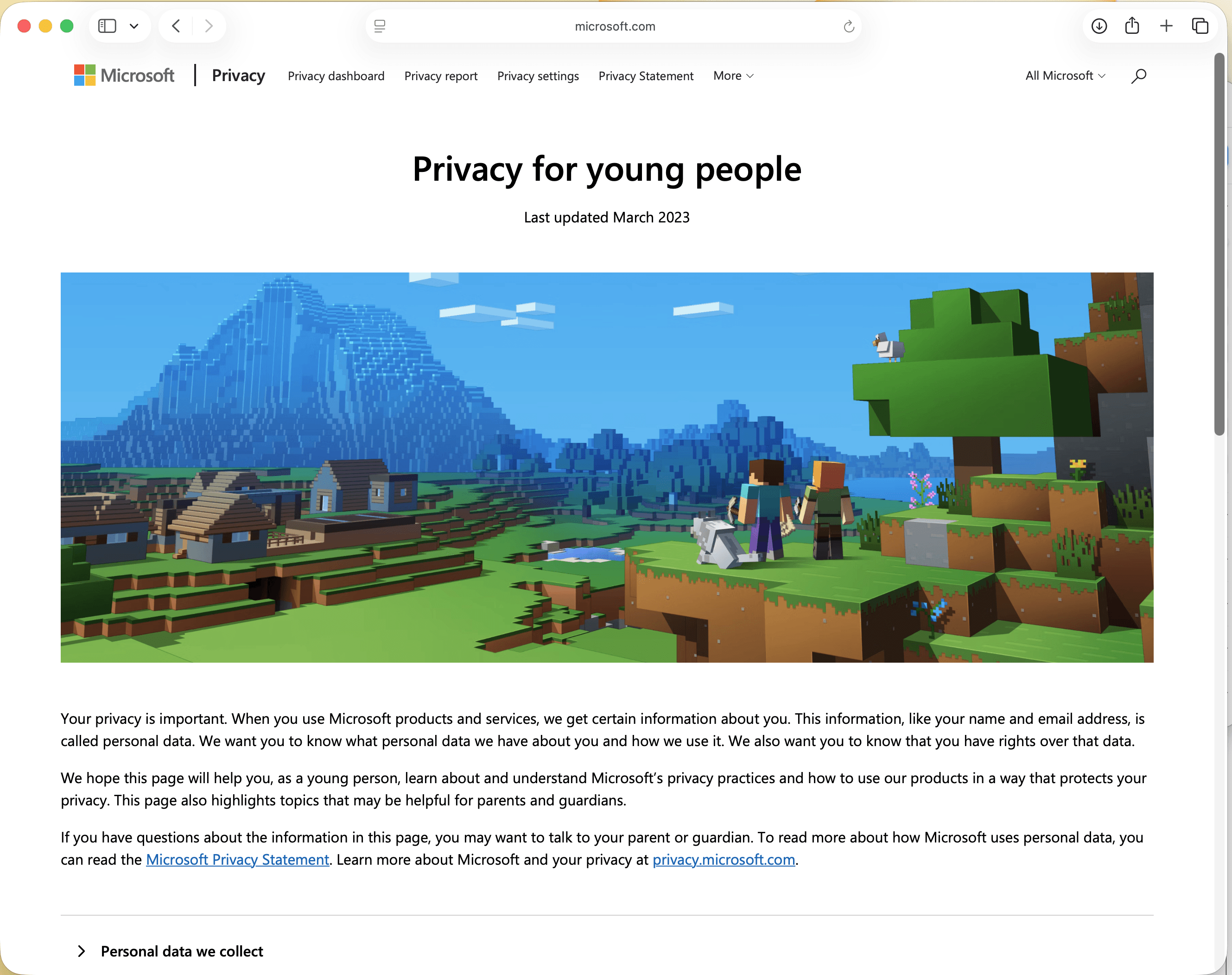
A Microsoft.com page that explains privacy to under-18s in their own register, shaped by a co-design workshop with about ten teenagers convened by the EU Commission. I was facilitator and co-author. The page launched in 2022 and is now an internal reference for lowering reading levels on privacy content.

Why did we do this?

Microsoft's privacy practices are intricate, and most of the surfaces explaining them assume adult readers. Younger users (and there are millions of them across our products) deserved a landing surface in their own register: clear about what we collect, what we do with it, and what they can control.

The work

The EU Commission convened a youth council of about ten teenagers from across the EU, mostly aged 16–18. We met online over multiple sessions.

Microsoft shared what our privacy work looks like. The teenagers ran us through some design exercises and told us, plainly, what would actually be helpful for younger people to know about their privacy rights, and (crucially) what they thought was missing.

One thing we didn't expect: many of the teenagers told us they're the ones explaining digital privacy to their parents and elders. The literacy gap on this topic doesn't always run the way you'd assume.

I was a facilitator in the workshop and a co-author on the page.
Outcomes

The page shipped in 2022. There was no big public moment, but it became an internal reference: when we writers argue for a lower reading level on a privacy surface, this is one of the examples we point to as proof it can be done.

That's a smaller win than I'd have liked. It's also probably the more durable one. Conventions about how privacy should sound change slowly inside large companies; a working example people can point to is often how that change actually happens.

What I learned

Co-design is most valuable when it gives you things you wouldn't have asked for. The Minecraft imagery and the "we explain privacy to our parents" insight weren't on any brief.

Reading level is a political fight, not just a craft one. There's a literacy crisis in the United States, and a lot of "plain English" privacy content still reads like a homework assignment. Defending plain language inside a privacy review is a recurring battle. Having a publicly shipped artifact to point to makes the battle shorter.