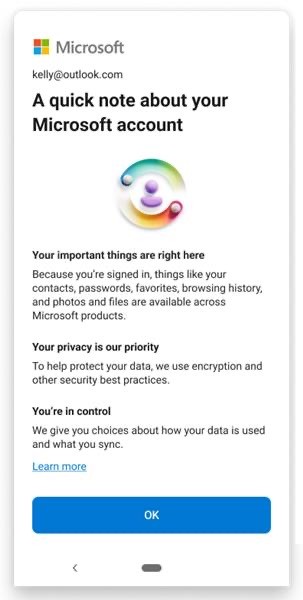
Microsoft Account Notice
A one-time transparency notice explaining how account-associated data works across the Microsoft ecosystem, shown to every Microsoft account holder — over a billion people. I led the writing across surfaces (Windows, Office, mobile). The work took 18 months.
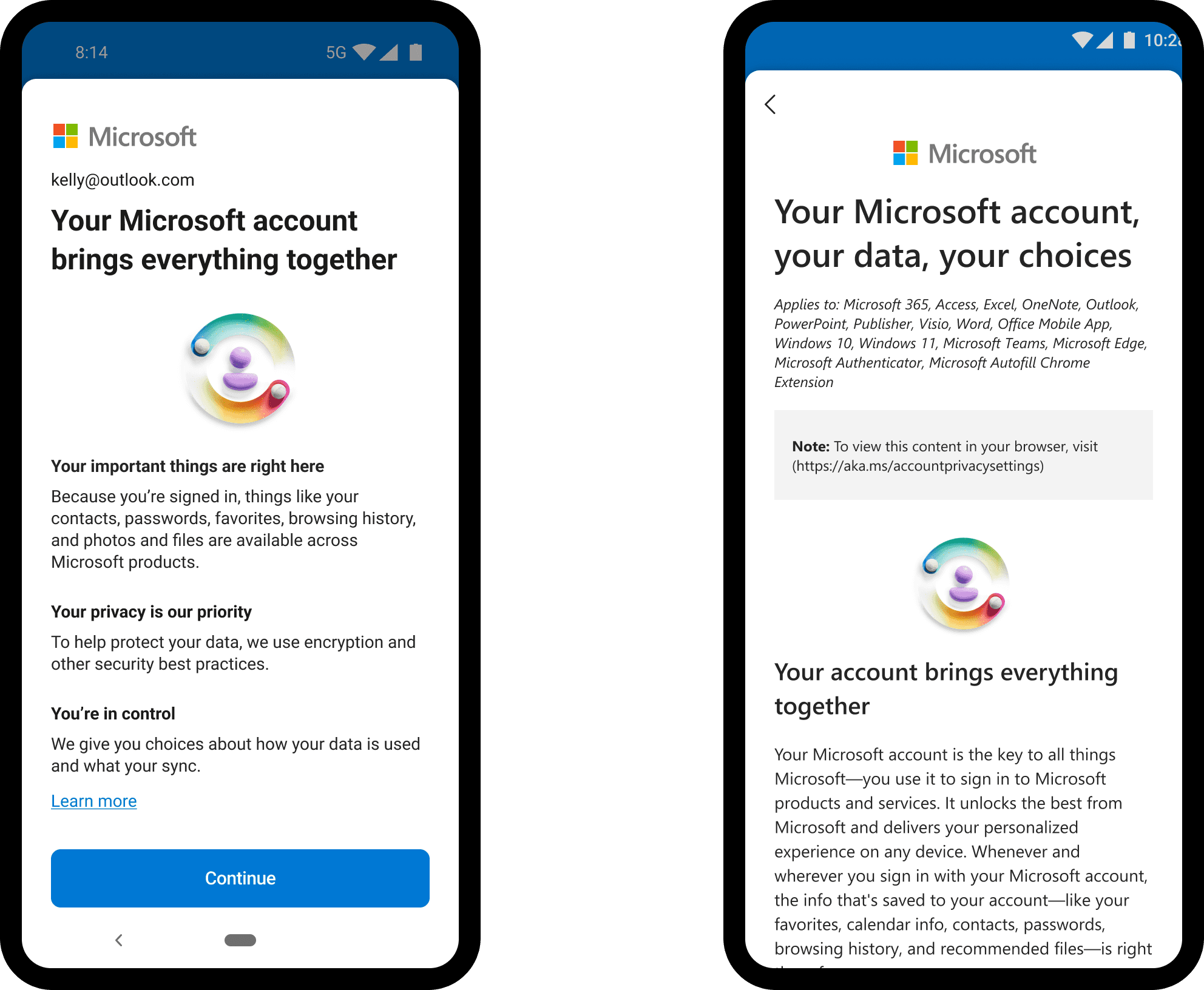
The genesis of a notice shown to billions of people
Microsoft's account-related data practices live across an ecosystem: Windows, Office, Xbox, Outlook, and more. Historically that landscape has been described in different places, in different voices, with different framing. The Microsoft Account Notice was the moment to harmonize — one shared explanation of how the system works, sent to everyone with an account.
The work
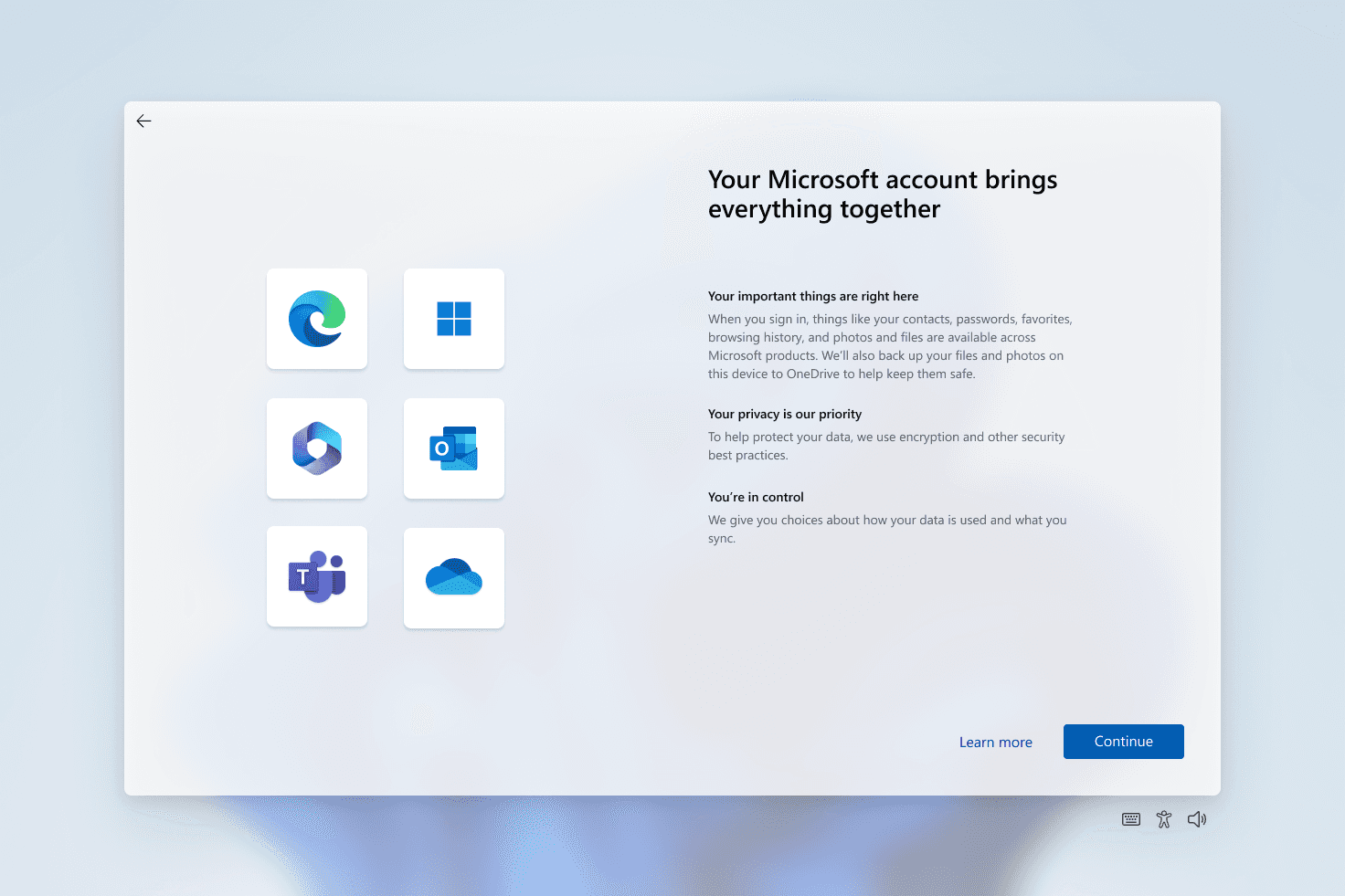
I owned every word, and the structure, voice, and strategy that produced it. The notice itself was the visible artifact; the work behind it included:
Writing for over a billion users, across reading levels, contexts, and languages.
Translating legal and regulatory requirements into plain English that wouldn't read as legalese.
Tailoring the notice for Windows, Office, and mobile while keeping the voice and structure coherent.
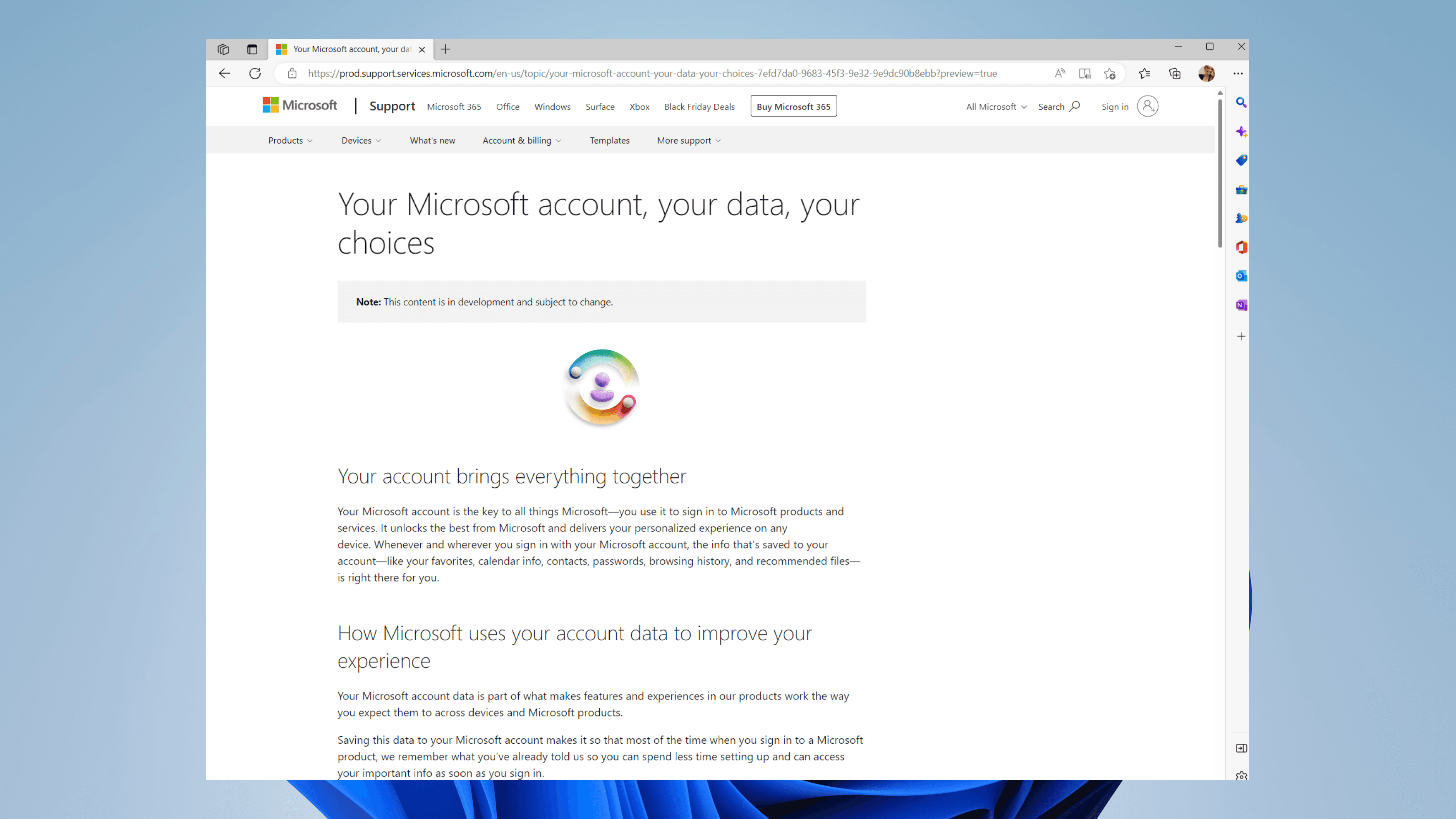
Designing regional variants to meet regional requirements.
Holding the voice line through 18 months of stakeholder review, dependency wrangling, and revision.
Stakeholders
Alignment required, by a rough count, nine separate functions: regulatory, legal, product, engineering, design, brand, content design, business planning, and product management.
Add to that executive review at the highest levels, including the CEO himself.
A writing project at this scale isn't really a writing project. It's a coordination project with words at the end.